
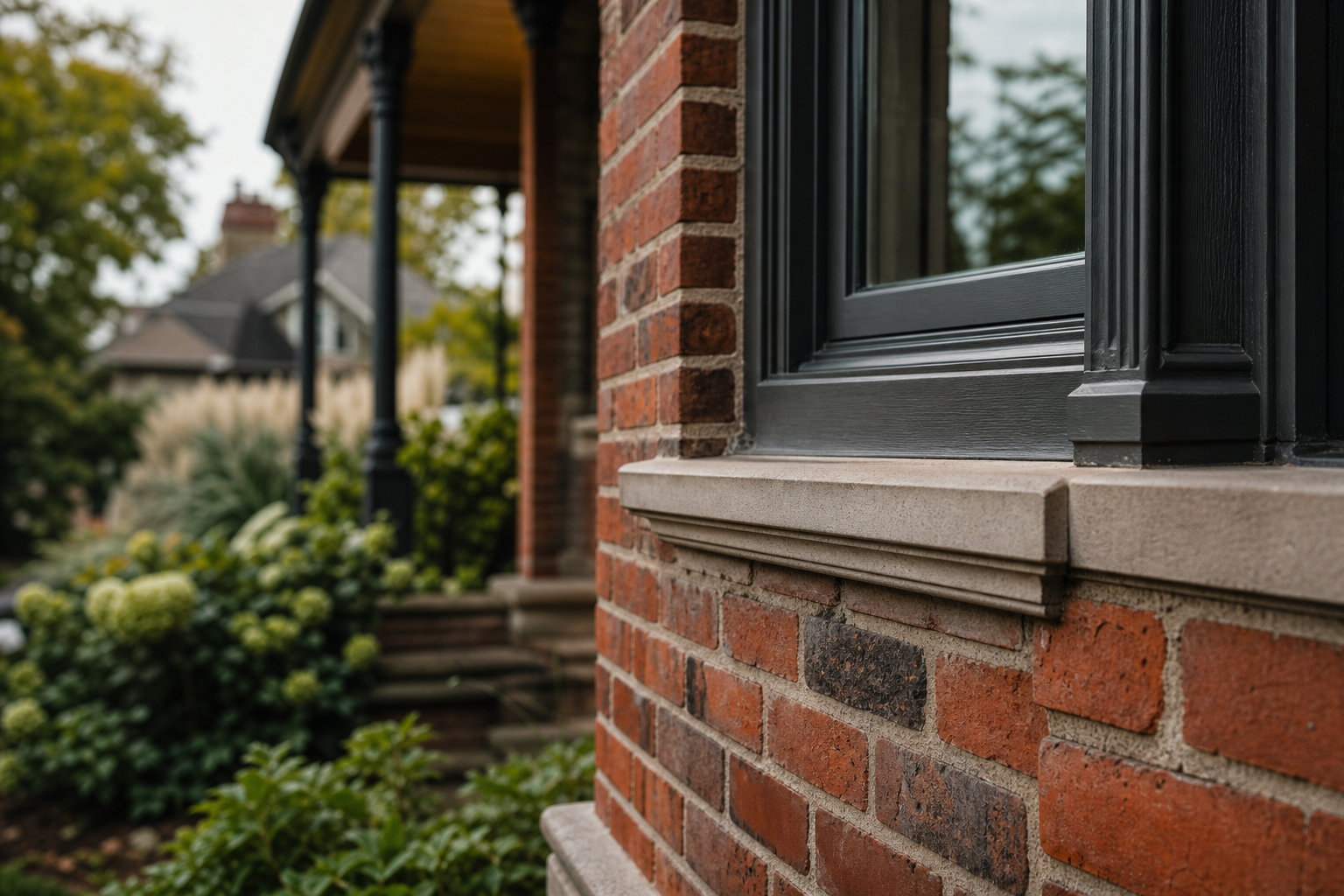
The right Columbus suburb depends on your commute destination, how much walkability you want, and what amenities matter most. Close-in suburbs like Worthington and Westerville offer main-street character with shorter drives; outer suburbs like Powell, Dublin, and New Albany trade proximity for newer homes and larger lots.
Which Columbus suburb is the best fit for your lifestyle?
The best Columbus suburb for your lifestyle depends on three things: where you work, how much time you’re willing to spend driving, and whether you want a walkable main street or a newer home on a larger lot. Close-in suburbs inside I-270 tend to offer shorter commutes and more established neighborhood character, while outer suburbs like Powell, Dublin, Lewis Center, and New Albany offer newer construction and major retail destinations at the cost of a longer daily drive.
Key Takeaways
- Median sale prices across the Columbus suburbs I work in range from $287,000 in Reynoldsburg to $400,000 in Marysville and Hilliard, based on recent local market data trailing 90 days as of September 2026.
- Marysville has the fastest-moving market in the area, with a median of just 16 days on market, while Groveport and Reynoldsburg sit at 42 and 45 days respectively.
- According to a 2025 commute-time dataset, Columbus averages 22.1 minutes across the city, well below Ohio’s statewide average of 26 minutes, though outlying ZIP codes push closer to 39 minutes.
- Regional planning research from MORPC’s Insight2050 initiative shows that walkable, transit-served neighborhoods along key Central Ohio corridors reduce both infrastructure costs and vehicle miles traveled compared to conventional suburban sprawl.
- Inside-I-270 suburbs (Worthington, Westerville, Gahanna) offer established town centers and shorter drives downtown; outside-I-270 suburbs (Powell, Dublin, New Albany) offer newer homes and regional retail but require more car time.
I’ve helped buyers settle into nearly every corner of Central Ohio over the past 30 years, and the question I hear most isn’t “what can I afford?” It’s “where do I actually want to live?” That’s a harder question, and the answer is different for everyone. Let me walk you through how I think about it.
How does commute time differ across Columbus suburbs?
Your daily drive is probably the single biggest lifestyle factor you can control when choosing a suburb. A 2025 ZIP-level commute dataset for Columbus puts the city’s average at 22.1 minutes, but that number hides a lot of variation. Campus-area ZIPs run as low as 12 minutes; more outlying ZIPs push toward 39 minutes. Ohio’s statewide average sits at 26 minutes, according to 2025 statewide commute data from Healthy Northeast Ohio, so Columbus and its closer-in suburbs actually compare well nationally.
Here’s how I break it down for buyers who are deciding between close-in and outer options:
Inside I-270: shorter drives, more established neighborhoods
Suburbs and municipalities that sit inside or right along I-270, including Worthington, Westerville, Gahanna, and parts of Hilliard, put you within a 15-to-25-minute drive of downtown Columbus, OSU, and the Short North on most days. You’re not fighting the full length of I-71 or US-23 every morning. The tradeoff is that housing stock is older, lots are smaller, and you’ll pay a premium for that proximity.
Worthington is a good example. It has a genuine walkable downtown on High Street, mature tree-lined streets, and a commute to OSU or downtown that rarely breaks 20 minutes outside of rush hour. Westerville gives you a similar small-town main-street feel on Uptown Westerville, with easy access to I-270 and Route 3. Gahanna sits close to the airport and the Easton corridor, which matters a lot if you work east of downtown or travel frequently.
Outside I-270: newer homes, bigger lots, more driving
Powell, Dublin, Lewis Center, New Albany, Pataskala, and Pickerington all sit outside the loop. You get newer construction, larger floor plans, and access to major retail destinations like Polaris Parkway, Bridge Park in Dublin, and Easton Town Center. What you give up is time. A buyer in Lewis Center heading downtown during morning rush is looking at 30-plus minutes on a good day. New Albany to Easton is short; New Albany to OSU is not.
For buyers who work in the Polaris corridor or from home, this calculus flips entirely. If your office is at Polaris and you’re buying in Powell or Lewis Center, you’re looking at a 10-to-15-minute commute. The suburbs I work in around Marysville and Plain City make similar sense for buyers whose jobs are in the northwest corridor or who work remotely.
What do the different Columbus suburbs actually offer day-to-day?
Commute is one dimension. The other is what your daily life looks like once you park the car. Here’s how I’d cluster the suburbs I know best:
Historic main-street suburbs
Worthington, Westerville, Gahanna, and Hilliard all have some version of a walkable town center. Worthington’s High Street and Westerville’s Uptown district both have independent restaurants, coffee shops, and community events that give the neighborhood a genuine sense of place. Gahanna’s Creekside district sits along Big Walnut Creek and has a similar small-town character. These are the suburbs where you can walk to dinner on a Friday night, which isn’t something you can say about every Columbus suburb.
Premium amenity suburbs
Dublin, Powell, and New Albany are the suburbs buyers often have in mind when they want newer construction and access to high-end retail and dining. Dublin’s Bridge Park development has added a walkable mixed-use district along the Scioto River that didn’t exist a decade ago. New Albany has a planned town center and is in the middle of significant economic activity driven by large-scale tech and manufacturing investment nearby, which I’ve covered in more detail in my post on how Intel’s New Albany investment is affecting the housing market. Powell sits just south of Polaris and gives buyers large lots and newer homes with easy access to that retail corridor.
Value-oriented suburbs with solid access
Reynoldsburg, Pataskala, Groveport, and Obetz offer meaningfully lower price points while still keeping you connected to the broader Columbus job market. Reynoldsburg sits along I-70 with direct access to downtown and the airport. Pataskala, a bit farther east, is growing fast and still has room for buyers who want a newer home at a lower price than the western suburbs. Groveport and Obetz sit in the southeast quadrant, close to major logistics and distribution employment along I-270 south.
For buyers who are still weighing the rent-vs.-buy question before committing to a suburb, I have a post on buying vs. renting in Columbus that might help frame that decision first.
How do current market conditions compare across Columbus suburbs?
Price and pace of sale vary more than most buyers expect across these communities. Here’s what recent local market data shows for the areas I work in most closely, based on aggregated public listing data trailing roughly 90 days as of September 2026. These are area-level medians; any individual home’s value depends on condition, street, build year, and timing.
| Area | Median Sale Price | Median Days on Market |
|---|---|---|
| Marysville | $400,000 | 16 |
| Hilliard | $400,000 | 37 |
| Gahanna | $385,000 | 37 |
| Reynoldsburg | $287,000 | 45 |
| Pataskala | $395,000 | 23 |
| Obetz | $299,999 | 36 |
| Groveport | $308,000 | 42 |
A few things stand out in this data. Marysville is moving fast, with a median of just 16 days on market, which tells you demand there is strong relative to supply. Pataskala at 23 days is similarly competitive. Reynoldsburg and Groveport are slower-paced markets where buyers tend to have a bit more negotiating room. For a broader look at what’s driving the Columbus market overall, my post on understanding the Columbus real estate market goes deeper on the regional trends.
Your specific situation, which suburb makes financial sense, what you can qualify for, and what the home you want actually costs in a given neighborhood, depends on details I can only work through with you directly. That’s where a market analysis and a real conversation beat any blog post.
Are Columbus suburbs getting more walkable?
Some of them, yes, and this is worth paying attention to if walkability matters to your daily life. MORPC’s Insight2050 initiative and a related Corridor Concepts report from ULI Columbus both conclude that walkable, transit-served neighborhoods along Central Ohio’s major growth corridors, including stretches of High Street and Broad Street, can meaningfully reduce driving and improve access to jobs and amenities compared to conventional suburban development patterns.
Dublin’s Bridge Park is the most visible example of a suburb deliberately building toward a more walkable, mixed-use center. Westerville and Worthington have had that character for decades. The suburbs that are still primarily auto-oriented, which is most of them, are not going to transform overnight, but the regional planning direction is clear. If you’re buying for the long term, it’s worth asking whether a suburb is moving toward more connectivity or doubling down on car dependency.
The Insight2050 Corridor Concepts analysis also reinforces what I’ve seen on the ground: buyers who want an urban-lite lifestyle without paying Columbus city prices are increasingly drawn to suburbs that have invested in a real town center, not just a strip mall.
FAQ
Which Columbus suburbs have the shortest commute to downtown and OSU?
Worthington, Hilliard, Westerville, and Gahanna all offer commutes to downtown Columbus and OSU in the 15-to-25-minute range under normal conditions, putting them among the most convenient options. According to a 2025 Columbus ZIP-level commute dataset, the city averages 22.1 minutes, and inside-I-270 suburbs consistently come in at or below that average. The farther out you go, toward Lewis Center, Marysville, or Pataskala, the more that number climbs.
How do Powell, Dublin, and Lewis Center compare for amenities and commute to Polaris and downtown Columbus?
All three are strong choices if your job is in the Polaris corridor, where each sits within roughly 10-20 minutes depending on your exact address. For downtown Columbus, expect 25-35 minutes or more from Lewis Center and northern Powell during rush hour. Dublin has the most developed amenity base of the three, particularly with Bridge Park’s restaurants, hotels, and riverfront access; Powell offers large lots and proximity to Polaris retail; Lewis Center tends to offer newer construction at slightly lower price points than Dublin.
What’s the difference between living in New Albany vs. Westerville if I work near Easton or the airport?
Both New Albany and Westerville put you within a reasonable drive of Easton Town Center and John Glenn Columbus International Airport, generally 15-25 minutes depending on traffic and your exact location. New Albany sits closer to Easton and offers newer, larger-lot homes in a planned community setting; Westerville has an older, more established neighborhood character with a walkable Uptown district and slightly more housing variety. New Albany is also seeing significant economic activity from nearby large-scale development, which is affecting both demand and long-term growth trajectory in that corridor.
Are Columbus suburbs becoming more walkable, or are they still mostly car-dependent?
Most Columbus suburbs remain primarily car-dependent, but a handful are actively developing more walkable town centers. Dublin’s Bridge Park, Westerville’s Uptown, Worthington’s High Street, and Gahanna’s Creekside district are the strongest examples of suburbs with genuine walkable cores. Regional planning research from MORPC’s Insight2050 shows the region is pushing toward more compact, transit-supportive growth along key corridors, so this picture is slowly changing, but buyers who prioritize walkability today should focus on those established main-street suburbs.
What local costs should I know about when buying in a Columbus suburb?
One cost worth knowing about is the Franklin County conveyance fee, which applies to most property transfers in the county. The Franklin County Auditor’s conveyance standards set the rate at $3.00 per $1,000 of purchase price, plus a $0.50 transfer fee per parcel. Who pays this fee is a matter of negotiation between buyer and seller, not a fixed legal rule, so how it gets allocated in your transaction depends on your contract. Your title company, Resources Title Co in our case, will walk you through all the closing costs specific to your transaction before you get to the table.
Choosing a suburb isn’t just a financial decision; it’s a daily-life decision. The numbers matter, but so does whether you’ll be happy driving that road every morning for the next ten years. I’ve lived and worked in Central Ohio long enough to know these communities well, and I’m glad to walk through your specific priorities, commute, budget, and lifestyle, to help you land in the right one.
Get a free home valuation or schedule a consultation at buycolumbushomes.com and let’s figure out which Columbus suburb actually fits your life.
Equal Housing Opportunity. Aftab Syed is licensed in Ohio as an Associate Broker, regulated by the Ohio Division of Real Estate & Professional Licensing. This article is general information only and does not constitute legal, tax, or financial advice. Confirm your specific costs and transaction details with your title company, tax advisor, or lender.

Join The Discussion